
US High School Band: What I Learned Only After My Kid Made the Cut
Not long ago my daughter passed her audition into the Symphonic Wind group — one of the top ensembles at her Georgia high school. Until that moment I honestly thought "a school band is just a band." It turns out American high school band programs are a whole different world. Here is what I wish I had known earlier, parent to parent.
School bands have levels
Most US high school bands are split into groups by skill: a Concert Band as the base, a Symphonic Band above it, and a top group like Wind Ensemble at the peak. The upper groups are filled by audition only — these students become the school's core performers. Starting high school in an upper band changes the trajectory of all four years.
The band is a doorway, not a destination
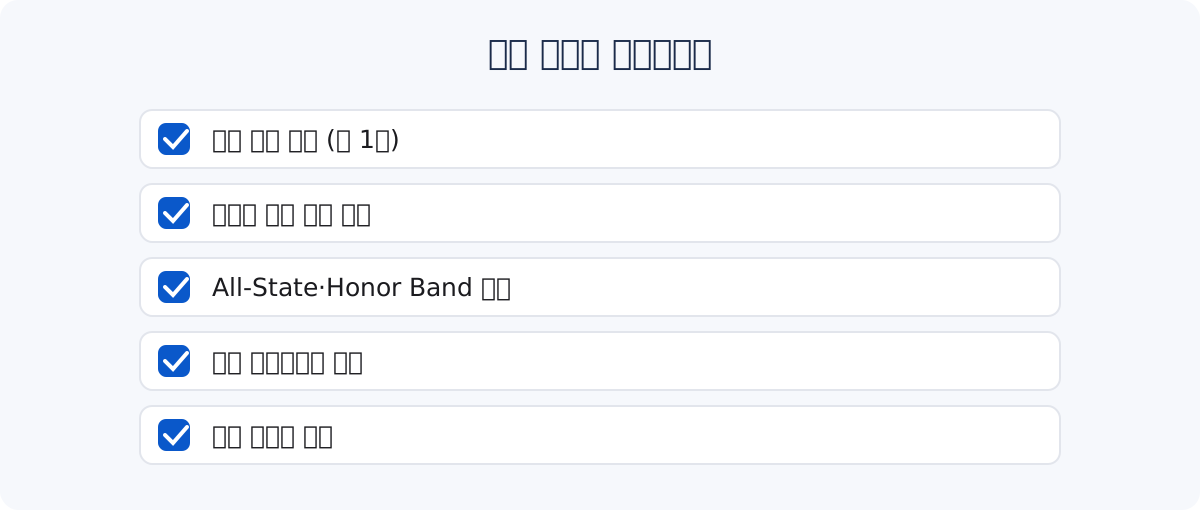
I also learned late that the school band is a starting point. There is a staircase of yearly challenges: All-State Band at the state level, District and Region Honor Bands, and Solo & Ensemble evaluations. These build a track record that later shows consistency on college applications — a real asset even for kids who won't major in music.
Parents really only need to manage three things
Looking back, my job came down to three things. First, keep private lessons going — school rehearsals alone won't polish audition pieces. Second, manage the audition calendar — miss an All-State or Honor Band deadline and you wait a full year. Third, add one stage outside school — a local youth orchestra offers real performance experience, and their summer workshops fill the vacation gap.
Closing thought
All we did was keep one instrument going, yet my kid is now climbing from "a good student" to "a student who keeps growing." The US school music system is more structured than it looks, and the more you understand the structure, the more opportunities you can catch for your child. If you have a band kid, start with one email to the band director this week — just ask for the audition schedule.